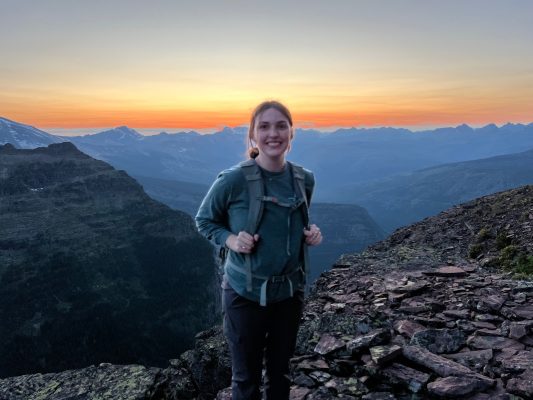
Dubenezic and Ng identify the location of the test plot.
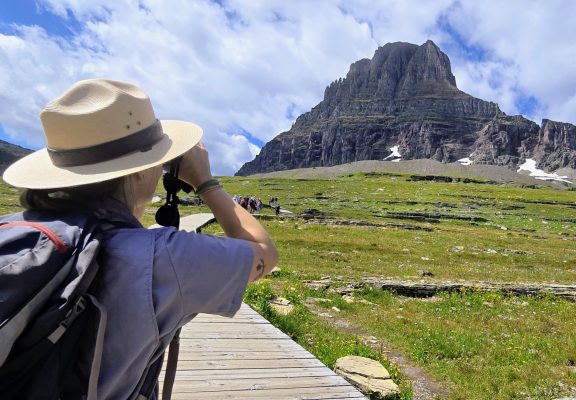
If you were lucky enough to find yourself at the Logan Pass Visitor Center this September, you may have noticed Allison Dubenezic and Marissa Ng starting their day off bright and early. Armed with hiking boots and a deep knowledge of plants, the pair of NPS biologists set off in search of a very specific plot of land.
They’re continuing an ongoing and important study focused on Glacier’s native plant ecosystems in alpine environments. You might recognize some of Glacier’s most beautiful alpine plants — from the iconic yellow glacier lily, to the fluffy seed head of the pasque flower — but the aesthetic value of these species isn’t the only thing that makes them so special.
“These alpine plants are really important for holding snowpack and creating soil,” Dubenezic explains. “It’s habitat for animals and pollinators.”

A patch of native alpine flowers near Logan Pass.
The plants in these alpine ecosystems are the foundation for the entire area. By holding snowpack, they ensure the continued flow of much-needed meltwater throughout the spring and summer. They also make up a large portion of the food supply for alpine animals and insects.
These alpine plants play a crucial role in their ecosystem, but their unique environment also makes them highly sensitive to changes in climate. Alpine environments typically spend the majority of the year covered in snow, with high winds and extremely low temperatures. As climate change continues, the average temperatures increases and the period of snow cover shortens. The plants, which have adapted to grow under extreme alpine conditions, alter their behaviors to the new climate. Because of this, these alpine plants are often the first indicators of how climate change will affect an area.
The study Dubenezic and Ng are working on focuses on specific plots in different alpine areas throughout the park. By monitoring which plant species appear in the plots and their frequency, scientists can see how these ecosystems are changing through the years.

The four quadrants of the test plot, marked by rope squares.
“It’s really important for us to continue tracking these changes as both visitation increases and climate change continues so we can see those impacts,” Ng says.
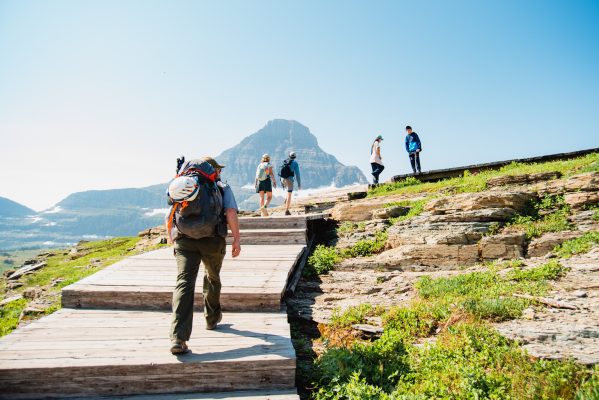
Alpine plants like those around Logan Pass are especially fragile and sensitive to trampling. To give these plants the best chance to survive, it is important to stay on trails and paved surfaces around Logan Pass and avoid stepping on plants to pass other hikers or take a picture.
Using pictures of the plots from previous visits, the team locates the general area they are looking for. Then, they rope off the plot into four distinct quadrants, making sure the areas they study exactly match with previous years.
They take turns identifying each plant in the quadrant, from the tiny grasses to the larger flowers and shrubs. Together they note down what percentage of the plot is taken up by each plant, careful to make sure that no species is missed. Along with the data they are collecting, they’ll take photos of each plot to use the next time they visit.

The roped off test quadrants with a sign identifying them for photos.
The work is meticulous and to anyone less versed in identifying alpine flora, Dubenezic and Ng would appear to be just staring at the ground for hours. In reality, they are doing critical work to ensure each individual plant is identified and the data is accurate for continued comparison. The data from their studies will play an important role in determining exactly how the changing climate will impact these fragile alpine ecosystems, and give the park the information it needs to protect these important plants. By funding studies like this one, the Conservancy aids the park in its mission to protect biodiversity, wilderness character, and healthy wildlife habitats.
“We really appreciate the funding we get from the Conservancy that allows us to do this really important work,” Ng says.
How can you help protect alpine plants in Glacier?
This project and many other critical projects and programs would not be possible without your donations to the Glacier Conservancy.
Donate now to support important work like this in Glacier National Park!